
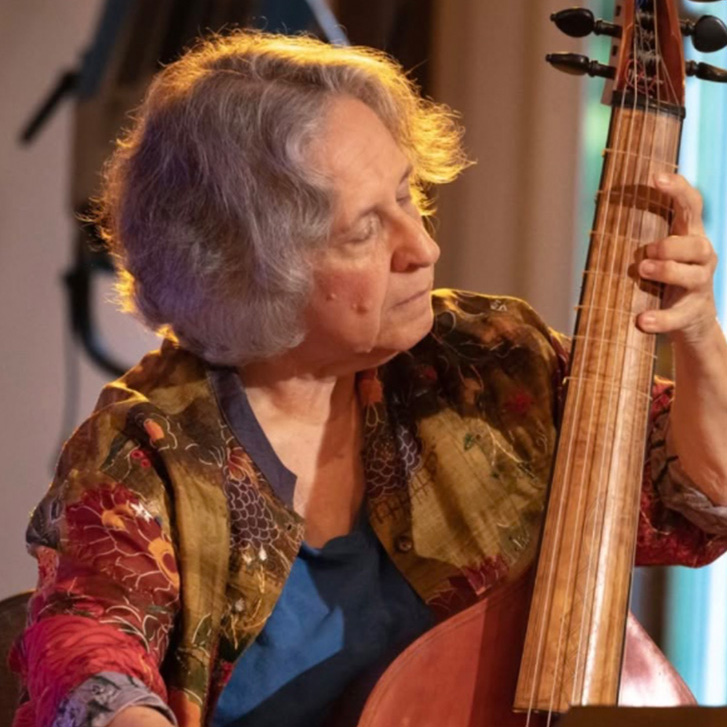
Tina Chancey
Archive text preserved from the Scott Reiss collection.
WARNING: This article mentions mental illness and suicide. If you need mental health support, please call the 988 Suicide and Crisis Lifeline
Scott Gordon Reiss was born in Coopersburg, PA (near Allentown) on March 24, 1951. His father, Gordon Reiss, was a Pennsylvania Dutch carpenter; his mother, Jeanne Reiss, a bank teller from a French traditional background. Most of Scott’s uncles and cousins worked in construction; he was the first of only two of his 60 first cousins to go to college. Scott’s father had bipolar disorder; at first this didn’t affect Scott at all, but it gradually became important.
Scott learned to play the clarinet as a young boy, and picked up the recorder as a teenager. In high school he joined the Cantieni brothers, David and Piero, to start a recorder consort, The Blackberry Brothers, which performed locally. Scott also made music with Sally Fortino, a teen who played piano and harpsichord, and Donald Wertman, who sang in the Bethlehem Bach Choir, at that time directed by Ifor Jones.
Following a year after high school working with Donald at a local seed company to save money for college, Scott attended Antioch College in Yellow Springs, Ohio from 1970-1975. He joined fellow students Bob Eisenstein, Christopher Kendall and Hilary Dearborn to form the Antioch Consort. The College gave the Consort money to buy instruments and supported run-out concerts to area colleges. They played all the early music they could get their hands on.
After graduation from Antioch, Scott moved to Boston to study recorder and choral conducting with Ken Roth at the New England Conservatory of Music, but it was not a match made in heaven. Bob went to New York City, where he studied viola da gamba with Richard Taruskin and became friends with Tina Chancey, a local freelance musician. Meanwhile, Christopher studied orchestral conducting in Cincinnati, then headed for Washington, DC for further study and started the 20th Century Consort, a new music group that is still a resident ensemble at the Smithsonian over 50 years later. The 20th Century Consort performed a concert at the Folger Library, where Christopher persuaded the director to found a resident early music group under the name the Folger Consort.
The Folger Consort began its residency in 1977 with a debut concert by the original Antioch Consort members, plus guest artists Ann Monoyios and Tina Chancey. Scott, whose brilliant playing made him a beloved figure among Consort audiences, became an early music star in DC. Warren Luther, another Consort original who played something he called a quint fidel (a hybrid treble viol and violin, played both viol-style and under the chin) ultimately moved back to Yellow Springs and the Folger Consort became Scott, Bob, Christopher and Ann Monoyios with regular guests. That initial season of concerts sold out immediately, giving rise to an ever-increasing number of annual concerts in DC, national concert tours, broadcasts and commercial recordings. The Consort continues to perform at the Folger.
After developing a relationship with Tina in 1978, Scott persuaded her to move to Washington, DC from New York by offering to found an early music group for her, which he called HESPERUS. In Greek mythology, Hesperus is the personification of the Evening Star—the planet Venus as it appears in the Western sky after sunset. Hesperus is also associated with Zephyrus, the warm and gentle Western Wind, as well as the Garden of the Hesperides that housed Hera’s immortality-granting golden apples, located at the farthest western point of the known world. Scott envisioned the HESPERUS Chamber Ensemble as a musical embodiment of the Western Wind that blew from west to east, connecting the Old World and the New. Founded in 1979, with Scott and Tina as co-directors, HESPERUS initially specialized in Baroque and British and Latin American Colonial music, since those were styles the Folger didn’t do. (A few years later, Folger expanded into Baroque music, and HESPERUS in turn expanded into Medieval and Renaissance.) Always curious about the fluid and generative relationship between early and traditional music, Scott created HESPERUS as a serious crossover group; one of the first early music ensembles to merge early music and traditional styles like Appalachian, Irish, Scottish, and Latin American, with such guest performers as Mike Seeger, Jean Ritchie, Bruce Hutton, Zan McLeod, Molly Andrews, (Bruce, Zan and Molly became HESPERUS members), Bruce Molsky, Karen Ashbrook, Craig Johnson, Pete Sutherland, Bonnie Rideout, and the Ecuadorian group Andes Manta.
Unlike the “smile and point” approach of some other early music groups at the time, where performers from different traditions appeared together on stage but didn’t really learn each other’s traditions, Scott and Tina (who married in 1981) spent their 30s attending workshops like the Augusta Heritage Festival, Pinewoods and Willie Clancy Week; playing in music sessions at local pubs, and coaching privately with specialists like Judy Hyman, John McCutcheon and Dewey Balfa, under the watchful eye of Bruce Hutton, who spent much of his time with HESPERUS learning twisty medieval dances by ear. Many of HESPERUS’ early music performers also participated in these crossover projects, including Bob Eisenstein, Peter Marshall, Mark Cudek, Grant Herreid, Johana Arnold, Rosa Lamoreaux and Nell Snaidas. HESPERUS became an ensemble in residence at the Smithsonian Institution’s National Museum of American History in 1983, where it developed the programming for the Spain in the New World concerts that were recorded in 1988, and became such a fixture in the national Columbus Quincentenary celebrations from 1991 to 1993.
In 1992, The U.S. Information Agency chose HESPERUS to represent the U. S. at festivals in Panama and Colombia, as well as on a five week tour of Asia (Hong Kong, Singapore, Taiwan, Brunei and Indonesia). The group got management and began an active touring and recording career, performing regularly at such venues as the Antiqua Festival in Bolzano, Italy; the Misiones de los Chiquitos Festival in Bolivia, and the Tage Alter Musik in Regensburg, Germany. For the next six years, Scott performed in Hesperus and the Folger Consort, developed a concerto program he recorded and performed in Kennedy Center’s Terrace Theater; and created an ongoing workshop, Ear Trade (later called Sound Catcher) to train amateurs to learn music by ear. He began a PhD program in Ethnomusicology at the University of Maryland with a dissertation project exploring the meaning and employment of the descriptive term “Celtic.” He also decided to quit the Folger Consort, to have more time to focus on performing Baroque concerti as well as expanding into recorder jazz and blues. However, the stress of so much change brought on a depressive episode— the first serious sign that Scott had inherited his father’s bipolar disorder—and he had to pull back and re-balance for much of 1998.
In 1999, the Earthwatch Institute, primarily geared “to expand access to hands-on environmental science and field research for educators, students and everyday people” decided to experiment with social science projects, and awarded Scott $60K to fund volunteers to help him do ethnographic research (informal interviews) on his thesis topic for eight weeks in Ireland, Scotland and Wales at festivals, pubs and workshops. Every two weeks Scott and Tina would collect nine to fourteen eager American lay volunteers at a local airport or train station, Scott would spend a day training them in interview techniques, and send them out to talk to the crowds. The fruit of this project was the chapter “Tradition and Imaginary: Irish Traditional Music and the Celtic Phenomenon” in the book Celticisms, (eds. Philip Bohlman, Martin Stokes, Scarecrow Press, Lanham, MD (2003)).
There is no good way to cushion the rest of the story. Scott died in December, 2005 of a self-inflicted gunshot wound. Perhaps his friend and Washington Post reviewer, Tim Page, said it best: “In spite of all the successes and encouragement, there was another side to Scott Reiss, and those who were closest to him were shocked and saddened but not especially surprised when he walked out into his Arlington garden, sat down by the grave of a beloved cat, and ended his life with a gunshot.”
Those of us who loved him are grateful for the years he spent with us, and we’ve created this website to share his music and philosophy with longtime fans and curious visitors.
Tina Chancey
2026
Scott Reiss
Founder and Co-director of HESPERUS was a pioneer on the recorder. At home in medieval, Renaissance, and baroque styles, he also possessed a command of Irish …
Tim Page
Anybody who heard Scott Reiss play the recorder was unlikely to forget it. He piped with fleet, exuberant abandon, spinning out complicated, rapid-fire melodies …